Biomarker data determine clinical trial success by predicting drug efficacy, monitoring disease progression, and tailoring treatments to specific patient populations. Evotec’s Biomarkers in Clinical Trials platform delivers end‑to‑end, GCP-compliant biomarker assays and non-GCP exploratory biomarker assays to support clinical development with precision and regulatory confidence.
Download our Biomarkers in Clinical Trials factsheet to learn more about our platform.
What Are Biomarkers & Why Are They Important in Drug Development?
Biomarkers are biological indicators measurable in blood, tissues, or other biofluids that reveal disease states, drug responses, and treatment efficacy. They are used throughout drug development, from early-stage drug research to late-phase clinical trials, to provide measurable insights into the pharmacodynamics, safety, and overall therapeutic potential of an investigational new drug (IND).
Why Partner With Evotec for Clinical Biomarkers?
Evotec's biomarker team works directly with partners to design and validate assays across GCP-compliant and non-GCP exploratory environments. We combine our 20+ dedicated GCP experts and 30+ non-GCP experts with your program-specific knowledge to work collaboratively toward confident clinical decision-making at each stage of drug discovery.
Our Biomarker Services Span Three Critical Areas:
1. Clinical Biomarkers Method Validation
We assess the reliability, accuracy, and robustness of analytical methods in full compliance with Food and Drug Administration (FDA) and European Medicines Agency (EMA) guidelines. Each validation follows a structured protocol, so your biomarker assays meet regulatory standards for clinical trial use.
2. GCP-Compliant Biomarker Analysis
Biomarker data are generated in our AIFA-accredited regulated laboratories, aligned with GCP standards to deliver data integrity and patient safety.
3. Exploratory Clinical Biomarkers Evaluation
Potential biomarkers are explored in early-phase or hypothesis-generating studies using a non-GCP framework*. This approach allows us to test multiple biomarker candidates with strong scientific rigor, without full regulatory overhead.
*Non‑GCP studies mean that we apply GCP principles in a proportionate, risk‑adapted way to ensure subject protection and data reliability, using simplified processes suitable for low‑risk or exploratory activities.
Each year, we conduct >40 method validations for clinical biomarkers, >25,000 clinical biomarker analyses, and support >20 clinical trials. Evotec's track record demonstrates our commitment to delivering robust, reproducible biomarker data that advances therapeutic development (Figure 1).
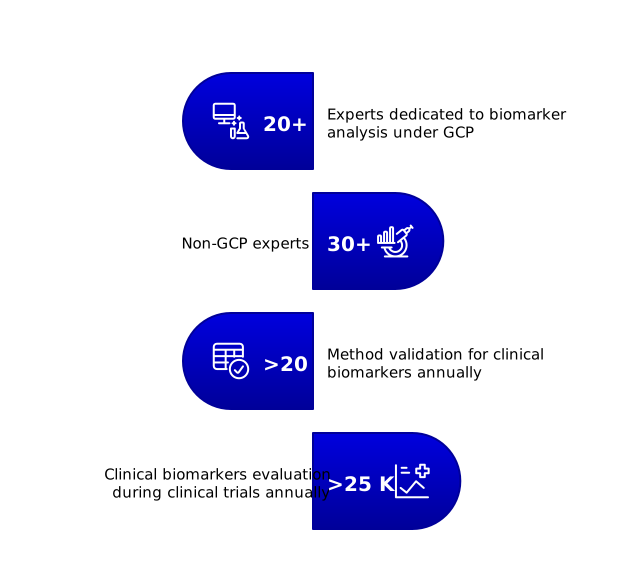
Figure 1. Evotec’s clinical biomarker expertise in numbers
GCP Environment and/or Non-GCP Exploratory Biomarkers Analysis
Evotec’s biomarker platform is built around two expert teams dedicated to supporting clinical trials:
1. GCP-Compliant Biomarker Assays
This team develops and validates biomarkers in accordance with regulatory standards to support decision-making under GCP. GCP‑compliant biomarker assays are developed and performed within a framework that sets the conduct requirements of clinical trials, including:
- Participant safety and ethical oversight
- Data integrity and traceability
- Sample management requirements
- Quality management systems
- Documentation and audit readiness
2. Non-GCP Exploratory Biomarker Assays
In this context, Non‑GCP studies mean that we apply GCP principles in a proportionate, risk‑adapted way to guarantee subject protection and data reliability, using simplified processes suitable for low‑risk or exploratory activities.
Evotec’s Biomarkers in Clinical Trials Capabilities and Expertise
Evotec’s biomarker platform supports therapeutic development across oncology, neuroscience, rare diseases, cardiovascular, and metabolic disorders. Our dedicated GCP and non-GCP exploratory teams deploy specialized technologies tailored to each program's regulatory and scientific requirements, supporting biomarker development and application from discovery through clinical validation.
GCP-Compliant Biomarker Assays
Our AIFA-accredited laboratories deliver regulatory-grade biomarker data for clinical trials. Each assay undergoes rigorous validation following FDA and EMA guidelines to deliver reproducibility, accuracy, and regulatory compliance. The table below outlines our core GCP-compliant biomarker assay capabilities.
Non-GCP Exploratory Biomarker Assays (GCP-Like Approach)
Our exploratory platform upholds scientific rigor while providing flexibility for hypothesis generation and biomarker discovery. These GCP-like capabilities support early-phase clinical trials, mechanism-of-action studies, and translational research that informs later-stage development strategies. The table below outlines our exploratory biomarker assays conducted with a GCP-like approach.
Case Studies: Evotec’s Biomarkers in Action
Evotec investigates biomarkers under both GCP and non-GCP conditions, tailored to clinical trial design requirements. Our approach includes performing method validation to the appropriate level required for clinical trial measurements, delivering data quality that supports confident decision-making throughout drug development.
Longitudinal Biomarker Analysis in Whole Blood
Evotec conducted a longitudinal analysis of mutant huntingtin protein (mHTT) in whole blood across multiple clinical trial visits (T0, T1, T2, T3). Using validated assays within our GCP-compliant, accredited facility, we tracked biomarker changes over time, enabling assessment of treatment effects and disease progression in patients (Figure 2).
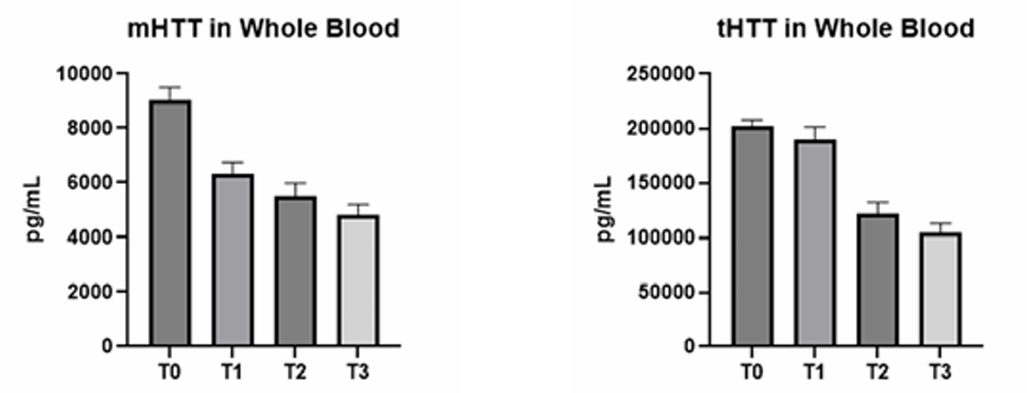
Figure 2. Longitudinal biomarker analysis in whole blood
Target Engagement via Phosphoprotein Flow Cytometry
For a target engagement assay in a clinical trial, Evotec quantified phosphomarker expression in CD8+ T-cells from whole blood samples using flow cytometry. The dose-response curve (EC50=47nM) demonstrated on-target drug activity at the cellular level, confirming the mechanism of action and supporting dose selection decisions during clinical development (Figure 3).

Figure 3. Phosphomarker in CD8+ T-cells in whole blood analyzed by flow cytometry
Multiplex Immunohistochemistry in Renal Cell Carcinoma
In a clinical trial for renal cell carcinoma patients, Evotec employed multiplex immunohistochemistry to simultaneously visualize the target protein (shown in blue) and immune infiltration markers (CD8 in yellow) within tumor tissue. This dual-staining approach allowed spatial analysis of target expression relative to immune cell populations, providing critical insights for patient stratification and therapeutic response prediction.
Ultrasensitive Protein Quantification in Neurological Disease
Using the Singulex platform, Evotec achieved ultra-sensitive quantitation of mutant huntingtin protein in cerebrospinal fluid (CSF) samples from clinical trial patients. Correlation analysis (r = 0.695, p < 0.0001) between CSF protein levels and disease burden score (CAG – 35.5) × age demonstrated the biomarker's potential use in prognosis, supporting biomarker-driven decisions in neurodegenerative disease programs.
Your Partner for Reliable Clinical Biomarker Data
Evotec's biomarker scientists collaborate directly with your team throughout the development process, from initial assay design discussions to regulatory submission support.
Our 20+ dedicated GCP experts and 30+ non-GCP experts bring rigorous validation expertise, while our >40 annual method validations demonstrate the depth of experience we apply to each partnership. This scientist-to-scientist approach has resulted in long-term collaborations with partners who return for multiple programs, valuing both our technical capabilities and strategic guidance.


