Exceptional customer support serves as the cornerstone of Cyprotex’s business strategy. The company takes pride in its ability to swiftly deliver high quality ADME-Tox data for the majority of standard screens in 5-10 working days. Cyprotex’s analytical capabilities play an important role in achieving these turnaround times. Not all customers have analytically amenable molecules which conform to standard screening approaches. Customers often choose Cyprotex for its specialist knowledge and expertise as well as its flexible approach. The company offers a range of state-of-the-art technologies which are suitable for analyzing some of the most challenging molecules.
Investment in Technology
Keeping abreast of the latest technology is crucial in order to develop Cyprotex’s capabilities and improve its service offering both in terms of speed and quality of data delivered to customers, as well as reduce costs. Hollie Adey, Principal Scientist in the High Throughput Analytical group at Cyprotex Alderley Park, co-leads a team of 8 analytical scientists. Hollie works closely with clients to understand and meet their needs.
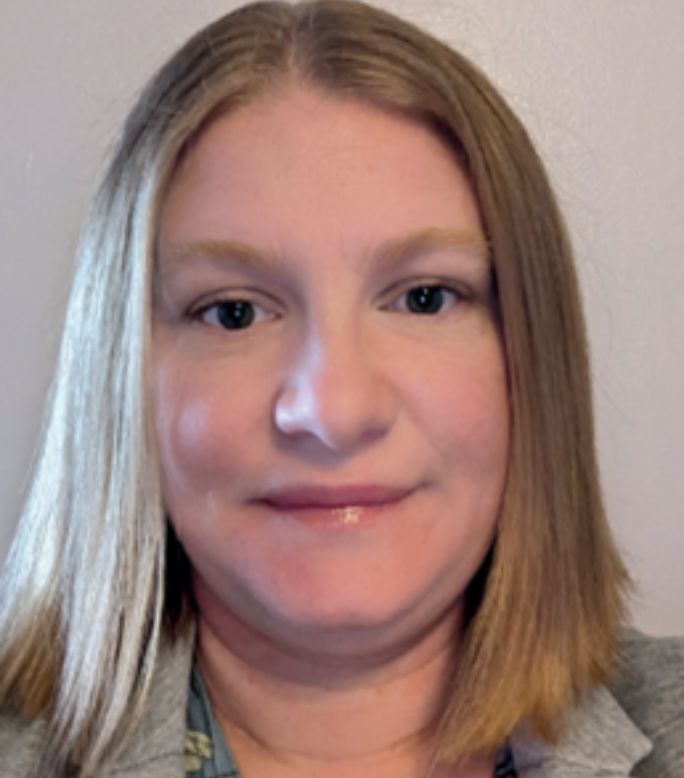
Hollie Adey, Principal Scientist in the High Throughput Analytical Group at Cyprotex Alderley Park
She comments on the strategy within the analytical team,
“We focus on adapting to the diverse needs of our clients. A key element, in my view, is our commitment to keeping up-to-date. We’re very much forward-thinking, so we’re planning all year round. If capacity reaches a certain point, then we bring in new instrumentation. And it’s not just about replacing like for like; it’s about future proofing, about what are the next steps beyond that. We invest in instrumentation that fits our capacity requirements and gives us something extra, whether it’s increased sensitivity or other features that meet our customers’ needs as they evolve.”
Although small molecules continue to make up the majority of the analyzed compounds, the team at Cyprotex are increasingly analyzing more challenging molecules which require a more specialist approach. These diverse molecules include very small polar molecules, peptides (both linear and complex), targeted protein degraders, oligonucleotides, lipids and antibody drug conjugates. These molecules have very different physicochemical properties to standard small molecules and can be classed as Beyond the Rule of 5 molecules. Often adaptations to the experimental protocol need to be implemented due to issues with characteristics such as instability and non-specific binding.
These molecules typically exhibit analytical challenges so standard equipment and approaches may not be suitable for analysis. Sensitivity, selectivity and recovery can often be problematic and alternative workflows may be needed to achieve high quality data. This may involve bespoke extraction and/or chromatographic methods such as ion pair liquid chromatography (IPLC), ion exchange chromatography or hydrophilic interaction liquid chromatography (HILIC). To enhance the diversity and flexibility of its service, Cyprotex has invested in a number of detection technologies including ion mobility spectrometry (IMS) and high-resolution mass spectrometry (HR-MS) alongside our standard LC-MS instruments.
Maintaining and Running Analytical Equipment
Cyprotex operates over 40 LC-MS/MS instruments at Alderley Park in the UK and Framingham in the USA, allowing spare capacity for critical and regular maintenance or unexpected equipment failure and ensures there are no delays in returning data. The Cyprotex High-Throughput Analytical team is responsible for the maintenance and operation of its analytical equipment. Laura Nabais is an Associate Scientist within Hollie’s team at Cyprotex.

Laura Nabais, Associate Scientist within Hollie’s Team at Cyprotex
She explains the quality checks performed to ensure quality data is generated,
“We optimize thousands of compounds per month, and data acquisition time per batch can be anything from a few hours to overnight runs. A typical start to the day for the High-Throughput Analytical team involves assessing the instruments and running system quality checks to make sure the instruments are performing to the expected level - if not, the information can aid troubleshooting and maintenance can be performed promptly. Assay data troubleshooting including control acceptance procedures can also aid diagnosis of any instrument issues”
Once the performance checks and any maintenance steps are complete, one half of the team sets up optimizations of new compounds, and the other half set up the instruments for the overnight sample analysis runs. Cyprotex supports its employees with flexible working schedules with coverage typically spanning 7 am to 6 pm (with capacity for remote monitoring outside of these core hours). This enables the analytical team to better serve the needs of its customers as the analytical scientists frequently act as a valuable resource for project discussions.
Caring for Our Customers
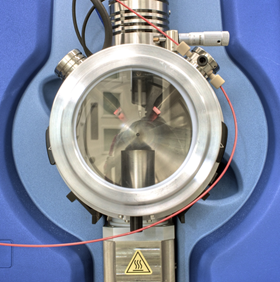
Hollie comments on how Cyprotex provides additional support for its clients;
“We support project from early discovery through to clinical stage DDI studies. For early-stage discovery projects, we are typically sent very little information on the compound, often just the molecular weight. We perform generic assays which are applicable for the majority of small molecule chemistry but we also develop compound-specific analytical methods if needed so are very flexible in our approach. We recognize that every client has different needs and requirements and are willing to adapt our processes accordingly. Every day is different which is why I enjoy my role so much at Cyprotex.”
Many of the analytical instruments are configured identically for consistency and efficiency. Whether assays run on one or across multiple instruments, the results remain the same. This uniformity is crucial for ensuring consistency across the Cyprotex operations. The instruments are highly sensitive and reproduce high quality analytical performance injection after injection, even with highly complex sample matrices. Software is in place which automates and optimizes standard method development for large compound sets and automated system checks ensure optimal performance of the instruments.
Updating analytical equipment is a constant process as the company aims to keep ahead of the curve in terms of investing in the latest technology. When transitioning from older instruments to newer models, Cyprotex needs to consider ease of integration and data migration.
Hollie explains some of the factors which are taken into consideration when purchasing new analytical equipment;
“Software compatibility is a crucial consideration. When we’re purchasing new analytical equipment, we prioritize its compatibility with our in-house LIMS. If it’s for capacity reasons, we might not have much time to install and fully establish within our processes. We need something that can be quickly set up and is ready to use. Space is another factor; we need to consider the instrument’s footprint. We work with clients over many years so keeping consistency in the data is important. Any equipment changes go through vigorous validation testing to demonstrate consistency whilst also showing the client the benefit of the upgrade – for example, lower levels of detection.”
Increased Capacity
Acquiring new equipment and upgrading infrastructure can be costly – not only the initial purchase of the instruments but also ongoing maintenance, calibration, and operational expenses. Adding new instrument platforms may disrupt existing workflows, leading to inefficiencies or bottlenecks if not done in a controlled manner. As a result, Cyprotex always looks ahead to what it needs to meet the future requirements of its customers.
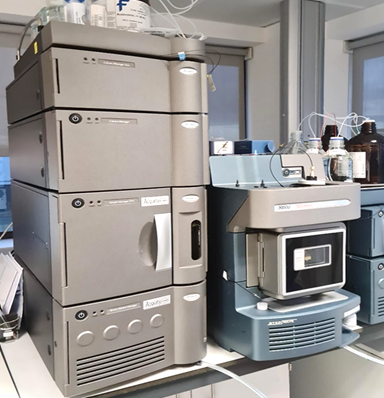
Hollie states the important of investing in new equipment,
“We are constantly planning and working with the equipment vendors to learn more about their next instrument. For us, it’s often an upgrade of requirements. For instance, a particular assay may require higher sensitivity. In such cases, we would transition to different instrumentation to fulfil client needs – this could be lower levels of detection or high-throughput of samples.”
Cyprotex constantly monitors capacity to determine the need for new instrumentation. Currently, instruments are running at approximately 80% capacity.
Laura discusses capacity on the instruments,
"If our instruments consistently operate above 80% capacity, downtime becomes a significant concern. Especially for high-throughput operations, having multiple instruments is essential.”
Cyprotex is screening thousands of compounds a week for its regular clients. As technology has advanced, analytical throughput has also increased enabling rapid turnaround times to be achieved.
Jennifer Pham is a Scientist in the Analytical team at the Cyprotex US site in Framingham.

Jennifer Pham, Scientist in the Analytical Team at the Cyprotex US Site in Framingham
She discusses improvements in efficiency,
"At the Framingham facility, we have optimized our running gradients thereby enhancing the speed of high-throughput assays. This improvement has significantly benefited our customers by reducing turnaround times and increasing cost efficiencies, while still maintaining the quality of the data. Through routine maintenance and diligent oversight, our instruments are equipped to generate substantial volumes of robust data."
Environmental Impact
Wherever possible Cyprotex considers the environmental impact of its operations, including minimizing solvent and consumable use and recycling materials where appropriate. Within its offices and laboratories, the company works to reduce energy consumption. Cyprotex takes part in the annual freezer challenge which has allowed the company to save energy through best practices in lab cold storage management. It is astonishing to think that one -80°C freezer uses the same amount of electricity as 2 x the average households in the UK. Taking part in this challenge has collectively with other contributors helped to save 31.8 million kWh of energy savings in 2024 – equivalent to 22,000 metric tons of carbon dioxide or 5,296 gas powered cars driven for a year. It is also important Cyprotex’s suppliers and partners work towards and uphold similar ethical and moral standards. Overall, the Evotec group aims to reduce Scope 1 and Scope 2 emissions by 50% by 2032, to source 100% renewable electricity by 2026, and has a goal to become net zero by 2045.

Hollie discusses our commitment to environmental sustainability,
“Both Cyprotex, and its parent company Evotec, focus heavily on sustainability for the company and our clients. This includes a sustainability pledge by donating trees, reducing plastic usage by replacing with more environmentally friendly materials and reducing electricity usage. As a company, we have ambitious environmental goals and aim to make a visible contribution to protecting the planet for future generations.”
Next Steps
Cyprotex is collaborating with its suppliers to increase the speed and throughput of its chromatographic instruments with rapid chromatography and injection technology. This provides obvious benefits to customers in terms of throughput, turnaround time and cost efficiencies. However, implementing changes such as these requires thorough assessment to ensure data delivery and quality is maintained. A new method will not be rolled out without thoroughly testing across a range of different chemistries.
As the market continues to grow for non-standard chemistry, it is anticipated that customers will reach out to Cyprotex due to its considerable experience working with diverse modalities. Investment in new technologies will allow Cyprotex to address this market more effectively as well as enhance the throughput, quality and turnaround times for the analysis of standard small molecules. Maintaining a close relationship with suppliers and developing these technologies in collaboration will reap the highest rewards. Technological advances over the past decade have continued to test the boundaries of sensitivity and throughput - it will be exciting to see where the industry will be in another 10 years!


