
Effective biomarker strategies are foundational to successful drug development decisions. Without early alignment to the mechanism of action, clinical positioning, and regulatory intent, biomarker programs risk generating data that cannot be translated into meaningful clinical outcomes.
Evotec’s Biomarker Strategy Design capability provides a structured, translational framework to define which biomarkers matter, when they should be implemented, and how they support indication selection, patient stratification, and clinical decision-making. By integrating scientific hypothesis, human sample feasibility, and regulatory awareness, Evotec helps de-risk development programs from early discovery through Phase I clinical trials.
Biomarker Strategy Design At Evotec
Evotec Expertise in Tailored Biomarker Strategy Design
Evotec’s Translational Biomarkers Strategy Platform delivers end-to-end support for biomarker design and implementation, from early discovery through clinical validation. The platform is built to align biomarker strategy with therapeutic objectives, clinical positioning, and regulatory intent.
- Strategic design and execution: Development of translational biomarker strategies that integrate discovery, assay development, and clinical application across development stages.
- Discovery and validation expertise: A combination of targeted and untargeted approaches to identify drug-related, pharmacodynamic, and patient stratification biomarkers.
- Clinical positioning and indication selection: Data-driven recommendations to define optimal indications, patient segments, and lines of therapy, strengthening clinical positioning.
- Specialist consultancy: Close collaboration with expert scientists, physicians, and histopathologists to ensure biomarker strategies address real-world clinical and translational needs.
What Makes Evotec Different:
Evotec designs biomarker strategies with direct visibility into sample feasibility, assay validation, and clinical implementation. This tight integration of strategic thinking, translational science, and regulatory awareness ensures biomarker plans are actionable, scalable, and aligned with decision-making in early clinical development.
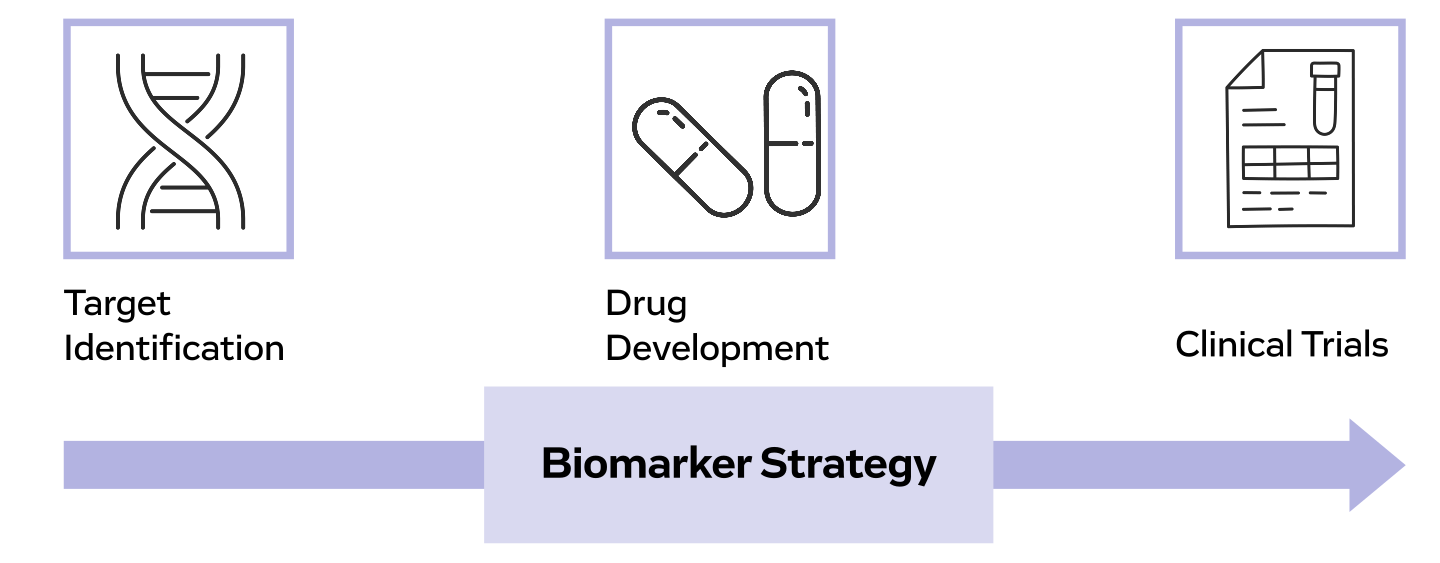
Figure 1. Evotec’s biomarkers strategy platform in drug discovery & development.
Early Strategic Insights for Mapping Biomarker Strategies
Evotec is developing an early strategic document to explore the clinical landscape, treatment lines, and biomarker options that support patient stratification and demonstrate target engagement.

Frequently Asked Questions
What types of biomarkers are considered during strategy design?
Evotec evaluates genomic, transcriptomic, proteomic, and functional biomarkers across relevant matrices to support target engagement, pharmacodynamic assessment, patient stratification, and early efficacy decision-making.
How does Evotec account for regulatory expectations when designing biomarker strategies?
Regulatory intent is defined early in the strategy design process. Evotec differentiates between exploratory and regulatory biomarkers, aligning assay development, validation depth, and data generation with FDA and EMA expectations.
Are existing biomarkers and industry benchmarks evaluated?
Yes. Evotec systematically reviews biomarkers associated with approved therapies and those under clinical investigation to benchmark feasibility, regulatory acceptance, and clinical utility.
Which biological samples are considered during strategy design?
Sample selection is driven by biological relevance, clinical feasibility, and longitudinal sampling requirements. Blood, tumor tissue, and other clinically accessible matrices are prioritized to support translational and clinical applications.
How are biomarkers selected for validation and clinical use?
Biomarkers are prioritized based on biological rationale, translational relevance, feasibility of measurement, and alignment with program decision points such as go/no-go or dose selection.
Do all biomarkers require regulatory qualification?
Only biomarkers intended to support clinical decision-making or regulatory submissions require qualification. Exploratory biomarkers are generated under a GCP-like framework to ensure scientific rigor and traceability while enabling early learning.